.webp)
Roblox Rainbow Friends: How Asymmetrical Monster AI Turns Simple Item Collection into a Test of Survival
Introduction: The Real Challenge Is Learning How Each Monster Thinks
At first glance, Rainbow Friends looks like a straightforward Roblox horror game: players enter a mysterious facility, collect scattered objects, return them to a designated location, and attempt to survive until they can escape. Yet the game's most interesting design feature is not the collection objective itself. It is the way different monsters force players to abandon familiar survival strategies and learn new rules under pressure. A cardboard box may protect someone from Blue, but it cannot solve every encounter. A corridor that was safe a moment ago can become dangerous when Green enters it, Orange's warning trail appears, or Purple turns a ventilation opening into a trap. The player is not simply running away from a monster; they are learning to interpret a changing environment.
Developed by Roy & Charcle, Rainbow Friends builds its first chapter around five nights of escalating objectives and threats. Players begin by collecting blocks, then progress through tasks involving food packs, fuses, and batteries before reaching the final escape sequence. Chapter 2 expands the formula with new areas and monsters, including Yellow and Cyan. The game describe a survival experience built around completing tasks while learning the distinct behaviors of the Rainbow Friends.
The central design question is this: how does Rainbow Friends use monsters with different detection rules to turn repetitive item collection into a tense process of observation, prediction, and decision-making? By examining the game chronologically, from the first encounter with Blue to the more complicated threats introduced later, we can see how the experience teaches players to read sound, movement, hiding places, and environmental signals. Its strongest moments occur when survival depends not on reflexes alone, but on understanding what each monster can and cannot do.
Roblox Rainbow Friends: How Asymmetrical Monster AI Turns Simple Item Collection into a Test of Survival
1. The Bus Crash: Establishing Fear Before Explaining the Rules
A normal field trip becomes a controlled disaster
The opening sequence establishes the game's central deception. Players are supposedly heading on a field trip to Odd World, but a mysterious figure changes the direction sign, sending the bus toward a dangerous location instead. The resulting crash removes the group from familiar surroundings and places them inside an unfamiliar facility. Rather than immediately explaining every system, the game begins with a simple narrative disruption: the players have entered a place they were never meant to visit.
This introduction matters because the horror depends on uncertainty. The facility is not presented as a normal playground with a few monsters added for excitement. It is a controlled environment in which the players do not know who is giving them instructions, why the objects are missing, or what the creatures actually are. The mysterious guide claims to need help retrieving items, creating a strange relationship between cooperation and captivity. Players must obey the objectives to progress even though the person assigning them has already demonstrated questionable intentions.
The objective becomes a reason to take risks
The game's opening also establishes a useful conflict between safety and progress. Players could try to remain near a familiar room, but doing so would not complete the task. To advance, they must enter corridors, explore rooms, and expose themselves to the unknown. The objective creates movement, while the monsters make that movement dangerous.
This is the foundation of the game's central loop: the player must leave safety to make progress, then find a way to return safely with the required item. The tension does not come from complicated puzzles or an elaborate inventory system. It comes from the fact that every trip across the facility carries the possibility of encountering something the player does not yet understand. The story gives players a reason to explore, while the level design transforms exploration into a series of calculated risks.
2. Night One: Blue Teaches Players to Respect Line of Sight
Why the first monster needs to be understandable
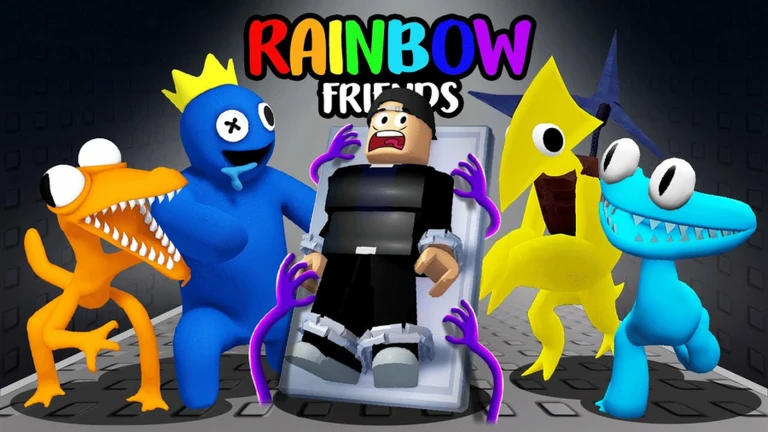
The first major task asks players to collect 24 blocks and return them to the theater. Blue is the principal threat during this stage, making the opening night a tutorial disguised as a survival challenge. Blue is visually distinctive, with a crown and an exaggerated, toy-like body, but his appearance is only part of the design. His pursuit behavior introduces the player to the relationship between visibility, movement, and hiding.
Blue's relatively readable behavior gives beginners an opportunity to understand the danger before the game adds multiple threats. Players can learn to recognize his presence through his footsteps and sounds, then react when he approaches. The cardboard box mechanic provides an accessible defensive tool: when used appropriately, it can conceal the player from a monster that relies on seeing them. The player therefore learns a basic rule of survival—when direct escape is unsafe, concealment may be better than speed.
The box is a rule, not a universal solution
The important detail is that the box does not make the player invincible in every possible situation. Its effectiveness depends on the encounter and the monster involved. Against Blue, it can interrupt the normal chase by removing the player from his direct view. But a player who waits too long to hide, chooses a poor position, or assumes the box solves every threat may discover that the apparent safety is temporary.
That limitation gives the mechanic its value. If hiding worked against every monster in every circumstance, the player could solve most encounters by repeatedly pressing the same button. Instead, Blue teaches a specific defensive relationship: recognize the threat, break line of sight, and hide when appropriate. The skill is not merely knowing that a box exists; it is learning when to use it and when to move.
For a first-time player, Night One can feel like a simple scavenger hunt. Underneath that simplicity, however, the game is teaching a fundamental horror-game habit: survival begins with understanding the enemy's detection system.
:quality(75)/3_c2661d5c43.jpg)
3. Night Two: Green Punishes the Habit of Hiding Automatically
A different threat requires a different response
The second night introduces Green while changing the collection task to food packs. This is a significant step in the game's learning curve because Green challenges the strategy that players have just learned to trust. Green is a tall, long-limbed creature whose movement and searching behavior make narrow corridors especially dangerous. Unlike Blue, Green is associated with blindness, meaning the player's response cannot rely on the same assumptions about visual detection.
The distinction is important because horror games often lose tension when enemies differ only in appearance or speed. If every monster simply spots the player and chases them, the player can apply the same escape routine repeatedly. Green creates a different problem: players must understand the specific rules of his behavior rather than treating him as a second version of Blue. His long reach and presence in confined spaces make direct contact dangerous, so the player must think carefully about routes and timing.
Learning to interpret movement rather than merely watch for pursuit
Green also changes how players evaluate corridors. A passage that seems empty may still be unsafe if the monster is moving through it or searching nearby. The player's attention shifts from looking for a direct chase to interpreting environmental clues, including the sounds associated with Green's movement. The game is encouraging a more cautious style of navigation: listen before entering, avoid rushing blindly into rooms, and do not assume that a familiar hiding mechanic will protect you.
This is where Rainbow Friends begins to teach layered knowledge. The player must remember Blue's visual threat while learning Green's separate behavior. A strategy that worked on the first night may now be actively dangerous. That creates a satisfying learning moment because failure can reveal a specific misunderstanding: the player did not lose simply because the monster was faster, but because they used the wrong response.
The challenge becomes more intellectual without requiring a complicated control scheme. Green's purpose is to make the player reconsider an established habit, proving that survival depends on matching the response to the enemy rather than relying on one universal trick.
4. Night Three: Orange and Purple Turn Navigation into Risk Management
Orange makes the floor itself part of the threat
As the game progresses, Orange and Purple introduce additional pressures that complicate movement through the facility. Orange is especially important because his warning trail can communicate danger before the monster reaches the player. Rather than relying exclusively on seeing a creature in a corridor, players must learn to interpret an environmental signal. A glowing or otherwise recognizable route marker becomes a prediction of where danger may travel.
This changes the player's relationship with the map. Previously, a corridor could be judged mainly by what was visible at that moment. With Orange, the player must also consider what is likely to happen shortly afterward. A route may look clear but still be unsafe because the warning indicates an approaching threat. The player is now reading the level as a system of possible future events, not just a collection of rooms.
Purple transforms a familiar shortcut into a trap
Purple creates another distinct problem through the vents. Ventilation openings may look like harmless architectural features or tempting shortcuts, but they can also become locations where the player must be especially careful. The danger is tied to proximity and positioning, making the environment itself an active part of the monster's threat.
This is an effective form of level-based horror because it changes the meaning of familiar objects. A player who assumes every vent is a convenient route may be punished for approaching it without checking the surrounding clues. Instead of treating the map as neutral space, the player must ask which parts of it are safe, which parts can conceal a monster, and which apparent shortcuts carry hidden costs.
By introducing Orange's warning signals and Purple's environmental threat, the game expands its vocabulary of danger. Players must now combine several kinds of information: where a monster is, where it might go, and which parts of the map may expose them. The collection objective remains simple, but the route to completing it becomes more demanding.
5. Night Four: Batteries and the Problem of Managing Attention
The task is simple; the combination of threats is not
Later stages increase the pressure by combining previously introduced mechanics with a new objective. The battery-collection sequence, associated with the later portion of Chapter 1, illustrates why item retrieval becomes more difficult as the monster roster grows. The player must still search the map, locate the required objects, and return them to the designated location. However, they must now do so while remembering multiple rules that can conflict with one another.
A strategy that protects the player from one monster may be ineffective against another. A route that avoids a visible threat may lead toward a dangerous vent. Stopping to assess a clue may provide useful information, but remaining in the wrong location for too long can create a different risk. The challenge becomes one of attention management: players must decide what information matters most at each moment and avoid becoming so focused on collecting items that they forget to monitor their surroundings.
Why carrying an item changes the psychology of risk
The collection system also creates a small but meaningful psychological pressure. Once a player has spent time locating an object, they may feel reluctant to abandon their route or retreat. That investment can encourage risky decisions: continuing toward a delivery point despite a warning, crossing a corridor when a monster may be nearby, or attempting to collect one more item instead of returning to safety.
A stronger player learns to separate the value of an objective from the urgency of completing it immediately. If a route becomes dangerous, waiting or changing direction can be more sensible than pressing forward. The game does not need a complex economy to create this dilemma; the player's time and effort are enough to make a seemingly small item feel valuable.
The lesson is that successful survival depends on controlling attention as much as controlling movement. Players must keep track of the objective without allowing it to dominate every decision. In Rainbow Friends, collecting everything quickly is not always the best plan. The more important skill is recognizing when continued progress is worth the risk and when caution is the better investment.
6. The Final Night: Why the Game Changes the Rules at the End
The promised reward becomes part of the trap
The final sequence of Chapter 1 is effective because it turns the idea of completion into another source of danger. After surviving the earlier tasks, players are led toward a farewell party and the prospect of finally leaving. The setting temporarily suggests that the ordeal is over. Blue is present, but his behavior in this sequence differs from the ordinary roaming encounters that players have learned to expect.
This is a deliberate use of expectation. The game has spent several stages teaching players to recognize patterns, so the finale can create tension by changing the context in which those patterns operate. Instead of treating the party room as a normal objective area, players must pay attention to what might trigger the chase. A seemingly harmless detail—the balloon popping—turns the celebratory scene into the beginning of another escape.
From cautious exploration to a high-pressure chase
The final pursuit also changes the player's immediate priorities. Earlier stages reward slow observation, route planning, and the careful collection of scattered objects. During a chase, however, the player must make rapid decisions while moving through a more constrained path. The emphasis shifts from searching for resources to navigating obstacles and reaching the exit.
This change in pacing helps prevent the game from ending with a routine delivery task. The player must demonstrate that they have learned more than where objects are located. They must also respond to sudden danger, recognize the route forward, and avoid being distracted by the apparent promise of safety. The final escape therefore serves as a practical test of the habits developed across the previous nights.
The sequence works because the game temporarily removes the comfort of its familiar rhythm. The player has learned how to survive the facility, but the final challenge asks them to apply that knowledge under pressure. The ending is not simply a reward for completing a checklist; it is the final reminder that apparent safety and actual safety are not always the same thing.
7. Chapter Two: Yellow and Cyan Expand the Detection Puzzle
New monsters must create new decisions
Chapter 2 builds on the original structure by introducing additional threats and a new setting associated with Odd World. Yellow and Cyan are particularly important to the evolution of the monster system because they expand the range of dangers players must recognize. Yellow can grab a player and carry them toward a nest, while Cyan can pursue players through obstacles. These behaviors introduce different forms of risk from the line-of-sight pursuit associated with Blue or the vent-based danger associated with Purple.
The distinction matters because a new monster should ideally change the player's decisions, not simply increase the difficulty through greater speed or damage. A creature that can carry a player away creates a different problem from one that chases through obstacles. The player must think about the consequences of being caught, the space available for escape, and whether a familiar defensive action is suitable for the encounter.
Expanding the player's mental model
With more monster behaviors in play, the game asks the player to maintain a growing mental model of the world. Each creature has a recognizable visual identity, but appearance alone is not enough. Players must remember what triggers pursuit, which actions can provide protection, and which environmental clues signal danger. This is a form of knowledge-based progression: the character may not receive a conventional level-up, but the player becomes more capable by understanding the rules.
The danger is that additional mechanics can become confusing if the game does not communicate them clearly. A new monster should have readable tells, a distinct behavior, and a response that players can learn through observation. If the player cannot tell why they were caught, failure feels arbitrary rather than instructive.
When the signals are clear, however, each new monster expands the game's strategic vocabulary. Players begin to recognize that there is no single definition of safety. Hiding, standing still, moving away from a warning trail, avoiding vents, and navigating obstacles are different tools for different situations. Chapter 2 becomes more interesting when it builds on that vocabulary rather than merely
repeating the first chapter with additional enemies.
8. Multiplayer Survival: Why Teamwork Can Help and Hurt
More players mean more information—and more confusion
Because Rainbow Friends is a multiplayer experience, survival is not only a test of individual awareness. Players share the environment, pursue the same objectives, and may help one another understand the map or identify danger. A teammate who recognizes a monster's warning signal can save others from entering a hazardous corridor. A player who knows the route to the objective can help the group avoid unnecessary detours.
Yet multiplayer also creates competing incentives. Several players may scatter in different directions to collect items more quickly, increasing the chance that someone encounters a monster without support. Others may follow a teammate into a dangerous area simply because that person appears confident. The group can become more efficient through coordination, but it can also amplify mistakes when players imitate a bad decision.
A useful division of responsibility
A coordinated team can reduce these problems by dividing attention in practical ways. One player might focus on nearby objectives, another might keep track of the route back, and others might communicate warnings when a monster is spotted. The game does not necessarily provide formal roles for every player, but the structure of the tasks makes informal coordination valuable.
Useful team habits include:
- Communicating a monster's location as soon as it becomes relevant.
- Avoiding unnecessary crowding in narrow corridors.
- Sharing route information rather than assuming everyone knows the map.
- Returning collected items when continuing to search would create excessive risk.
- Helping inexperienced players understand why a particular hiding strategy does or does not work.
These habits reveal an important dimension of the game's design: knowledge can be shared, but responsibility cannot be eliminated. A teammate's warning is useful only if the player understands what to do with it. A group can know where a monster is and still fail if nobody changes course. Multiplayer therefore reinforces the game's central lesson: survival requires converting information into action.
9. Why the Monster System Works—and Where It Can Become Frustrating
Clear differences make failure easier to understand
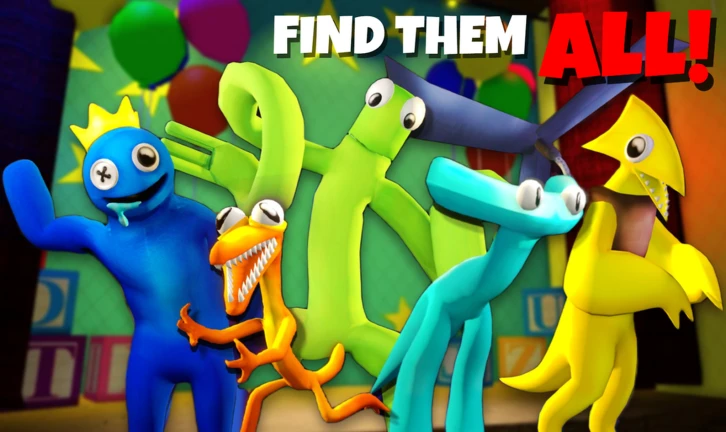
The strongest feature of Rainbow Friends is the distinct behavior of its monsters. Blue teaches players to manage visibility. Green forces them to reconsider automatic hiding. Orange makes warning signals and route prediction important. Purple turns the ventilation system into a source of danger. Yellow and Cyan expand the range of possible consequences when a player is detected.
This variety makes failure more informative than it would be in a game where every enemy behaves identically. After being caught, a player can often identify the mistake: they entered a dangerous corridor, ignored a warning, misunderstood a monster's behavior, or trusted a defensive tool in the wrong situation. That sense of cause and effect encourages experimentation. The player can adjust their behavior on the next attempt rather than relying entirely on luck.
When difficulty stops feeling fair
The same system can become frustrating when the player does not have enough information to understand what happened. A monster may appear suddenly in a narrow passage, multiple threats may converge on a single route, or a player may be unfamiliar with a mechanic that experienced players already know. In those circumstances, failure can feel like a punishment for ignorance rather than a consequence of a decision.
Good horror design needs uncertainty, but uncertainty is not the same as randomness. The player should not always know where a monster is, yet they should have some way to interpret clues and respond intelligently. Audio signals, visual warnings, consistent movement rules, and recognizable environmental hazards help establish that fairness.
The ideal balance allows players to feel vulnerable without feeling helpless. Rainbow Friends is most effective when it gives players enough information to make a decision while withholding enough certainty to keep that decision tense. The monster may still catch them, but the encounter should leave them with a better understanding of the game.
10. The Future of Rainbow Friends: Deeper Interactions, Not Just More Monsters
The next step should be more meaningful combinations
As the game expands, adding new monsters and locations is an obvious way to create fresh content. But the deeper opportunity lies in combining established behaviors in new ways. A level can become more demanding without simply introducing a faster enemy if it forces players to navigate a warning trail while considering a vent hazard and planning a return route with collected items.
This kind of design rewards mastery because the challenge comes from managing several known systems at once. Players do not need to memorize a completely new set of rules every time they enter a chapter. Instead, they must recognize how familiar rules interact under different circumstances. A previously easy route might become difficult because its timing changes, because another monster occupies the corridor, or because the objective encourages players to travel farther from safety.
Such combinations can make the game feel more sophisticated while preserving its accessible controls. The player still runs, hides, observes, and collects items, but the context makes each action more meaningful. This is a stronger foundation for long-term replayability than increasing enemy speed or making every encounter more punishing.
Preserve the clarity of the original survival loop
The challenge for future chapters is to preserve the clarity that makes the original game approachable. The colorful designs and simple objectives invite new players into the experience, while the different monster behaviors provide the depth needed to keep them engaged. If new mechanics become too numerous or poorly communicated, the learning process can turn into confusion. If every new threat behaves almost identically to an older one, the game risks becoming predictable.
A successful evolution would therefore focus on three priorities:
- Distinct behaviors: Each monster should create a recognizable decision rather than merely add another chase.
- Readable signals: Players should be able to learn from sounds, visual cues, and environmental patterns.
- Meaningful combinations: Later stages should challenge players to apply existing knowledge in more complicated situations.
These principles would preserve the identity of Rainbow Friends while allowing its levels and encounters to grow more complex. The game does not need to abandon its basic item-collection structure. It needs to keep finding new ways for that structure to test the player's understanding of danger.